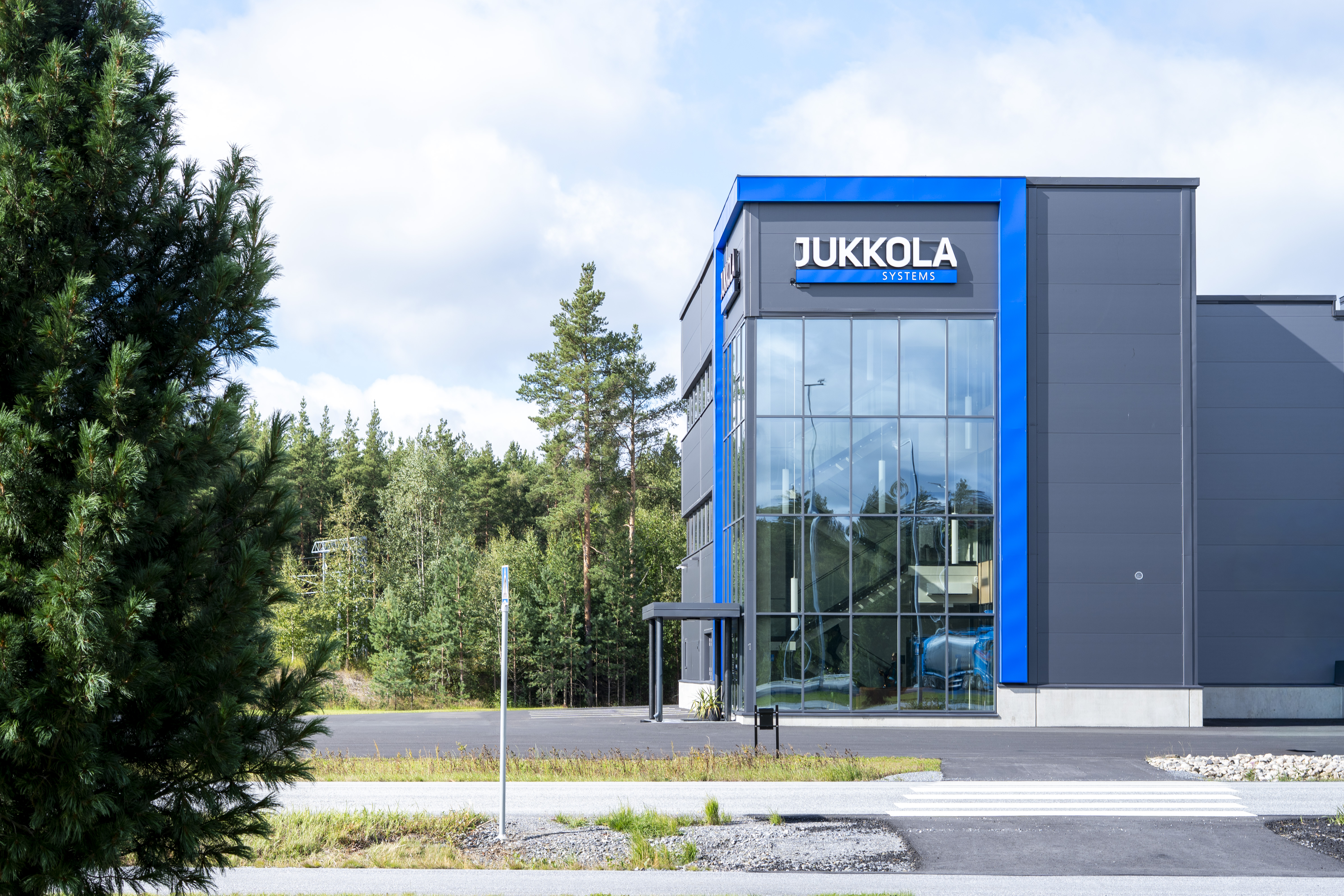
"Our company has ambitious growth targets and aims to develop further," says Jonas. "These new facilities enable our next steps in growth, enhancing production efficiency, streamlining warehouse operations, and modernising our office and sales spaces." The building was ready. The question was whether the systems inside it were too.
When the Stock Room Becomes the Bottleneck
Moving into a new facility is a rare chance to get things right from day one. But a gleaming building is only as good as the workflows inside it. For Jukkola, storage had always been a friction point: items stored without intelligence, staff doing the mental legwork of remembering locations and cross-referencing quantities, and picking orders managed on a case-by-case basis rather than systematically.
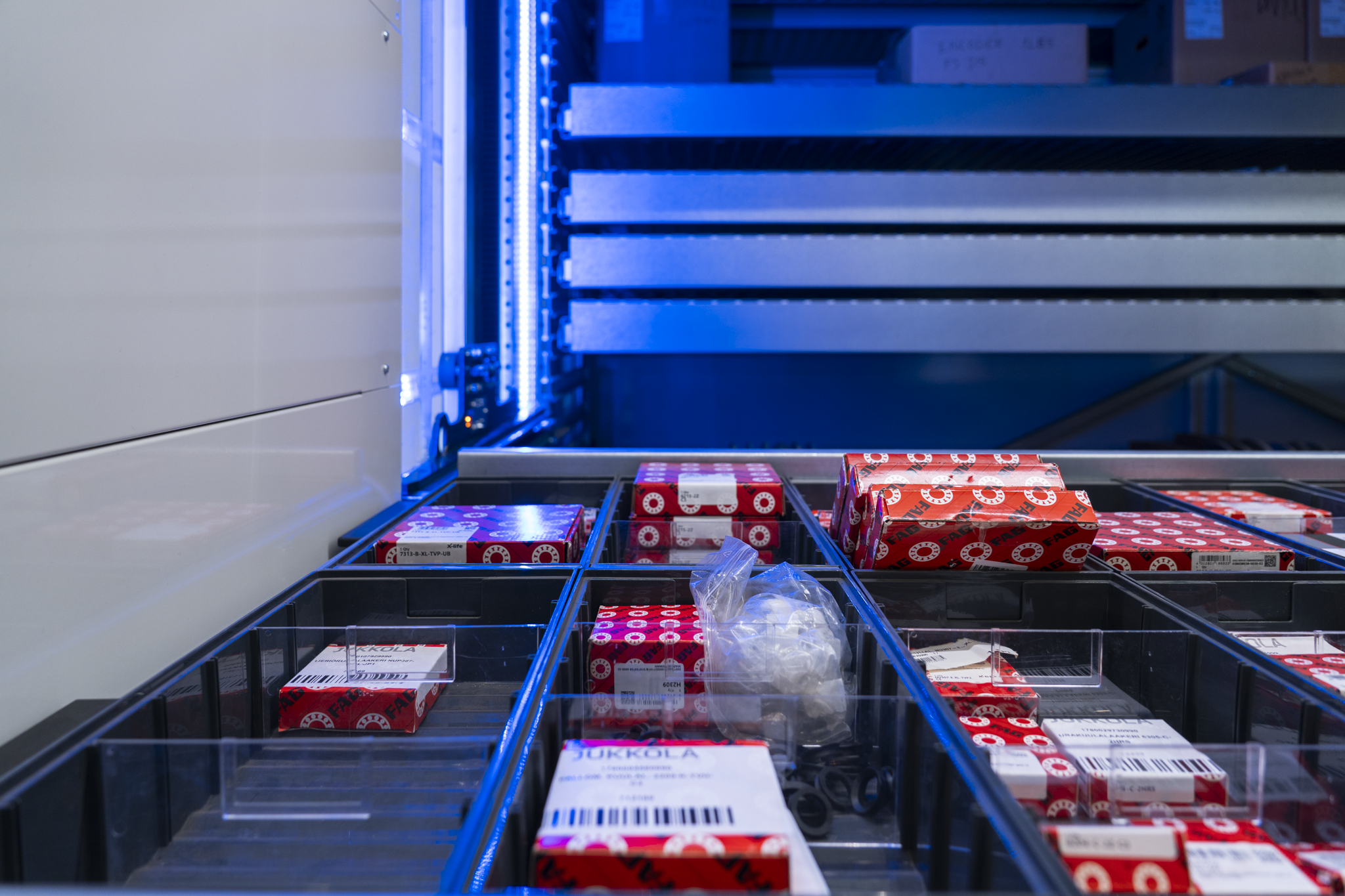
The issue wasn't that Jukkola lacked stock. It was that the stock lacked visibility. When a picking order came in, someone had to go and find it - physically, manually, often repeatedly. Inventory records and shelf reality didn't always match up. That kind of gap might seem small on any given day, but across a team and hundreds of transactions, it compounds quickly.
There was also the matter of the customer experience. Jukkola's new facility was designed to be customer-facing; a place where clients could visit, see the operations, and leave feeling confident in their purchase. A chaotic storage area doesn't project that confidence. They needed a solution that could hold its own in a professional environment, not something to hide behind a closed door.
What They Actually Needed
Jukkola needed storage that could do three things at once: consolidate a large amount of product into a relatively small footprint, automate picking so the team stopped working order-by-order, and integrate cleanly with their ERP system so that inventory, invoicing, and stock levels stayed in sync without manual intervention. Additionally, supporting the local Finnish industry was also part of the brief, not as an afterthought, but as a genuine operating principle.
Why a Vertical Lift Machine? And Why GonvaLift?
There were options on the table. Traditional shelving would have been cheaper upfront and familiar. But it wouldn't have solved the core problem: a person still needed to do the searching, the walking, the counting. The inefficiency doesn't go away, it just gets rearranged.
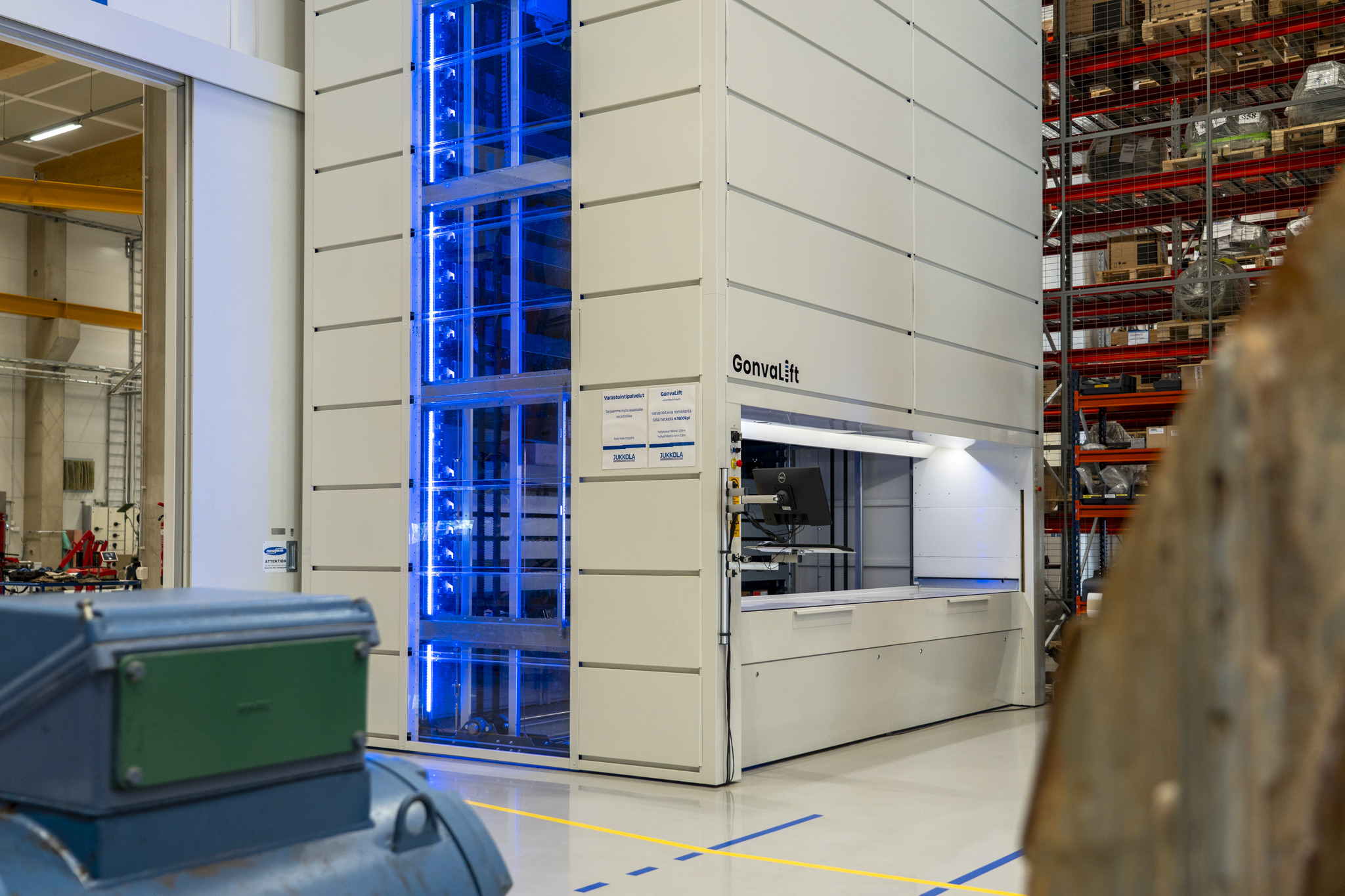
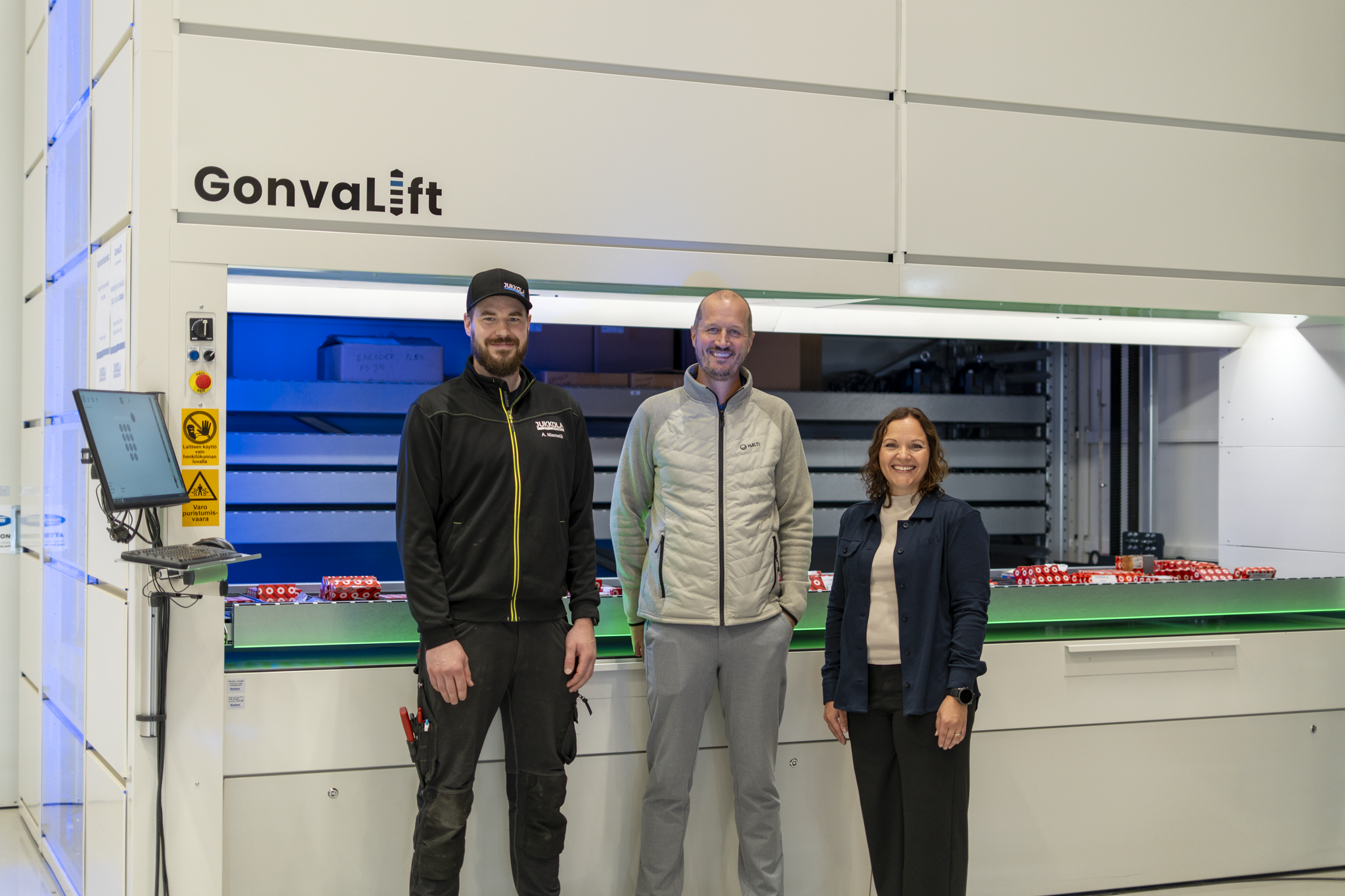
A Vertical Lift Machine works differently. Stock is stored in a tall, enclosed unit that retrieves items automatically on the push of a button. You enter what you need, the machine finds it, and it arrives at the access point ready for picking. No wandering. No guessing. No, “I'm sure it was on the third shelf from the left.” The GonvaLift VLM offered exactly this , and crucially, it arrived with ERP integration already built into the proposal.
That last point was significant. Jukkola has invested heavily in software solutions, and any new addition to their operation needed to connect with those systems from day one. Kasten understood that and built it into the scope rather than treating it as an add-on.
The local angle was equally important and for Jonas, non-negotiable. "An important factor in our decision was that we have a domestic product," he says. "We wanted to highlight and support Finnish industry. In the same way, we support it with our own actions. This was essential for us."
GonvaLift, a product produced by Kasten and delivered by local dealer Stoka, fit that brief perfectly. The installation was planned to spec, delivered on schedule and managed without any issues.
The Difference Was Immediate
Ask Jonas what changed and he doesn't hesitate. "We are now able to streamline our small supply storage and product storage. We get different picking orders automatically. Our inventory balance is all in place. We don't work individually anymore. When we get new orders, picking is made significantly easier. And what is most important to us: we practically have a huge amount of stuff in a small space." No more chasing stock. No more manual searching. The machine handles the retrieval; the team handles the work that needs a human.
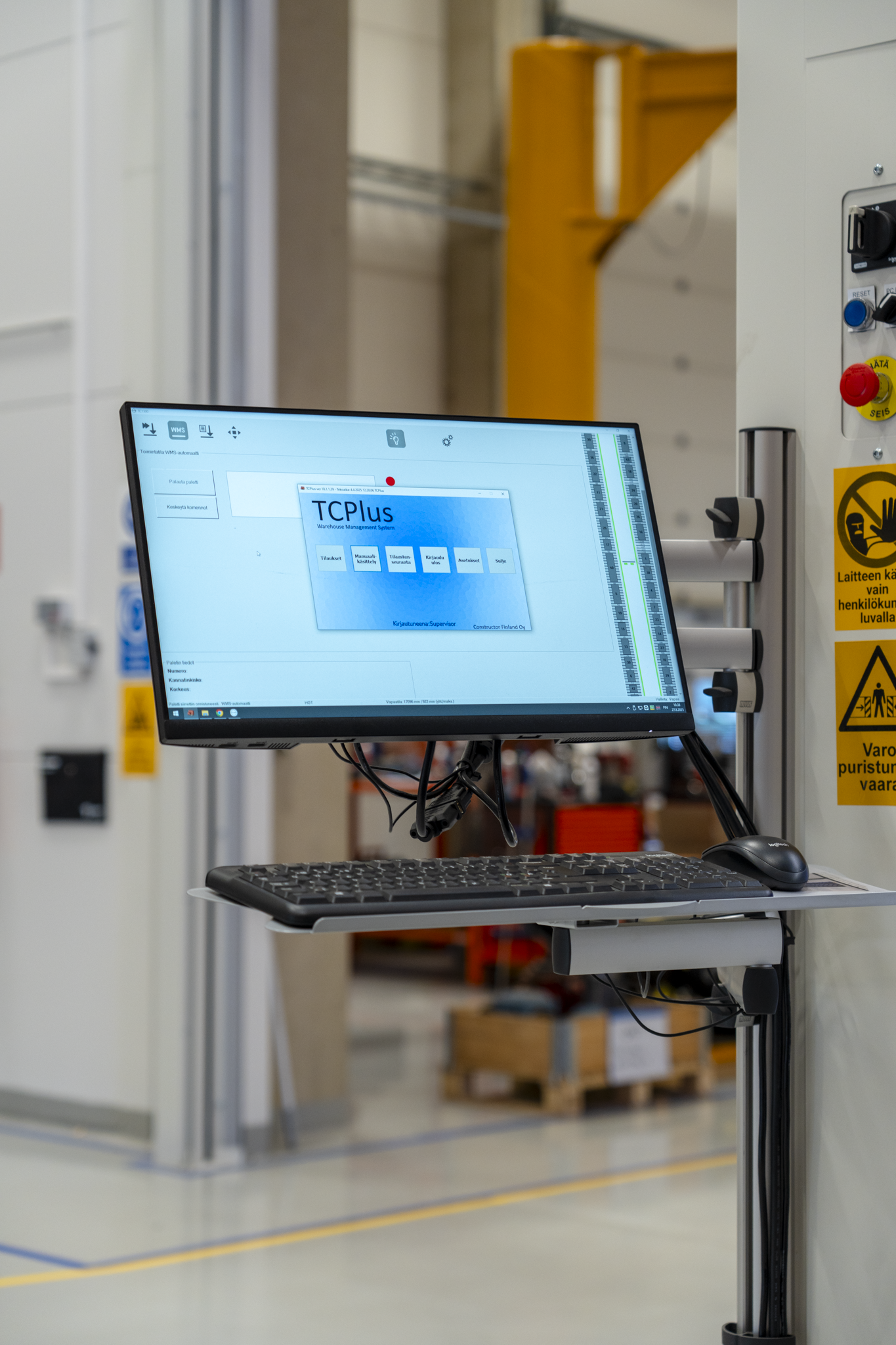
"ERP integration was practically a lifeline for us. It was already included in the proposal phase and was really important to us." - Jonas Jukkola, CEO, Jukkola Systems
Stock levels, picking orders, and invoicing now flow through one connected system. When something is picked, the ERP knows. When an order comes in, the machine responds. The gap between what's on the shelf and what's in the records (a persistent headache in the old setup) has effectively closed.
The installation set the tone for the whole partnership. Timelines were agreed in advance, floor load specifications from the building's design phase were factored in, and the team delivered within the agreed window. No surprises. For a business trying to hit the ground running in a new facility, that reliability matters as much as any feature.
And there's still room to grow. Jukkola has already reserved the floor space for a second unit. "When this one is full, we can simply place a new VLM next to it, thereby increasing capacity," says Jonas. "All the necessary systems are already in place for this." They built for today and planned for tomorrow, which is exactly the kind of thinking that got them here in the first place.
"All our questions were answered and our requirements were reviewed. The interface and everything else were handled well. We reached the ordering and final delivery stages without any issues." - Jonas Jukkola, CEO, Jukkola Systems
Built for What's Next
Moving into a new facility is a rare chance to get things right from the start. Jukkola Systems took that chance seriously. The GonvaLift VLM isn't just keeping stock organised. It's keeping Jukkola's promise to their customers: that when you walk through their doors, you'll find a team that's ready, a system that works, and a business that invests in getting the details right.
Because in manufacturing, the details matter. And storage is always a detail - until it isn't.