Measuring the success of a project is just as crucial as the planning that is involved. Setting clear metrics proves value, highlights improvements, and proves if the retrofit has helped your business as intended. A retrofit must deliver visible improvements, not just look good on paper. Your goals shape your definition of success. Maybe you're aiming for expanded storage, faster picking, safer processes, or gearing up for future automated systems. By regularly checking performance against these goals to see if your retrofit is truly improving business operations.
Setting the benchmarks
The first rule of evaluation is that you cannot measure progress without a starting point. Before the retrofit, you must establish clear baselines for every metric you plan to track. This historical data acts as the control group, allowing you to see exactly how much your new setup has moved the needle on efficiency and cost. If storage density was the primary driver, start there. If workflow bottlenecks were the problem, look at travel time and throughput. A retrofit that solves the wrong problem or solves the right one poorly, has not succeeded, no matter how well the installation process went.
Typical retrofit goals include:
- Increasing storage density.
- Improving picking speed.
- Reducing congestion.
- Supporting future growth.
- Improving safety.
- Making better use of existing space.
The more precisely these were defined at the outset, the more clearly success can be measured now.
The shift from floor space to cubic volume
For most facilities, the primary decision driver is the space crunch. Traditionally, warehouses measure capacity in square footage, but a well executed retrofit shifts the focus to cubic space use. Before the upgrade, a lot of that volume was effectively wasted: dead space above pallets, wide aisles that served forklifts at the expense of density, vertical space left completely untouched.
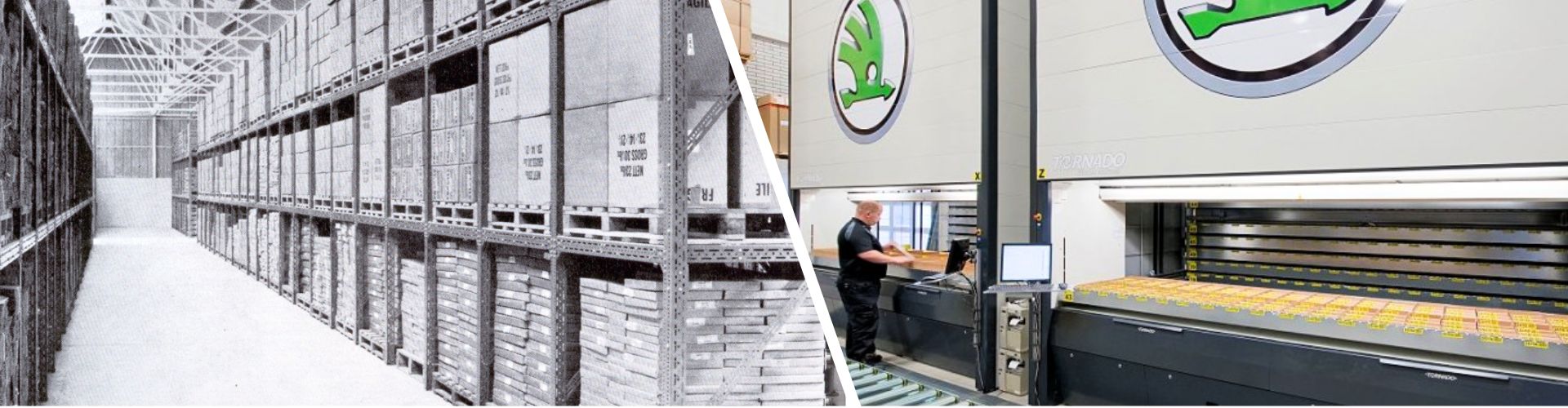
But, by transitioning to a high-density racking system or a vertical lift machine, you grow the warehouse up rather than outward. Success here isn't just about how much inventory you can fit, but how quickly that stock can be rotated. What you might call 'Cubic Velocity'. A successful retrofit should deliver a 40% to 80% increase in usable storage capacity within the same footprint, effectively delaying the massive capital expense of moving to a larger building.
Reimagining picking performance
Picking has always been the most expensive and time-consuming part of fulfilment. In a pre-retrofit environment, a picker can spend up to 50% of their shift simply walking to retreive stock. An indepth analysis of a successful retrofit should show a meaningful reduction in travel distance per order.
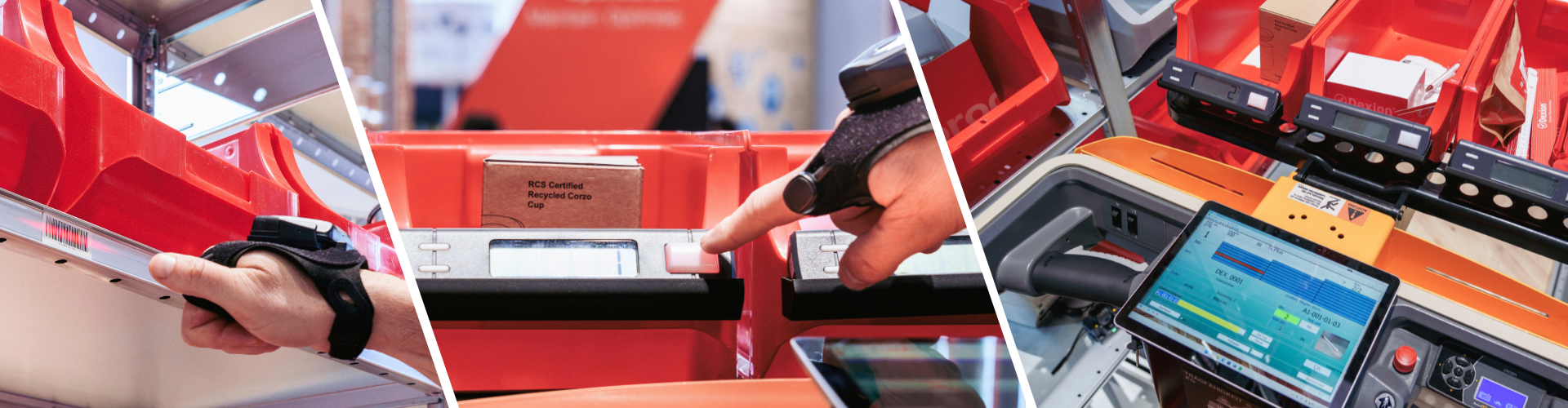
Whether you’ve implemented "goods-to-person" automation or simply optimised your slotting strategy based on a new WMS, the metric to watch is Units Per Labor Hour (UPH). In a standard manual setup, 60 to 80 picks per hour is the limit. Post-retrofit, particularly with the help of pick-to-light or AMR technology, that number should double or even triple. This is not simply about moving stock faster, but about removing the non-value-added time spent navigating endless aisles, and turning previously wasted movements into a more productive output.
Labour efficiency and the cost of scaling
When evaluating labour performance, look beyond the amount of hours worked. A successful retrofit stabilises your Cost per Order even as wages rise or labour markets tighten. Before the upgrade, scaling for peak demand likely required a linear increase in headcount. Post-retrofit, the measure of success is whether fulfilment capacity can grow without a corresponding spike in labour costs.
Additionally, order accuracy deserves particular attention here. Every mispick carries a real cost, in reverse logistics, re-processing, and customer impact. Moving from a 98% accuracy rate to something approaching 99.9% can, in many businesses, generate savings significant enough to contribute meaningfully to the retrofit's payback period.
Review the financial return
A warehouse retrofit is an investment, and financial performance should be part of any honest evaluation. Compare total project cost against the measurable value of improvements: reduced labour time, lower operating costs, improved storage utilisation, fewer errors, and any costs avoided, including the significant capital outlay of relocating to a larger site. Some of these figures will be straightforward to measure. Others will require estimation. But, both are valid.
Check for future readiness
A retrofit that solves existing problem but leaves the operation exposed to future challenges is only a half-baked success. The strongest measurement is adaptability. Can the site support future volume growth, new stock profiles, changes in picking methods, or a further step towards automation? A layout that can evolve without requiring another major capital project has delivered long-term value, not just an immediate operational fix.
Keep reviewing over time
Avoid judging the retrofit only in the first days after go-live. Some improvements need time to settle, particularly where staff are adjusting to a new layout or process. A structured review at go-live, after the operation has stabilised, and again over a longer period gives the clearest picture of whether the project has delivered what was intended.
A retrofit is successful when the data confirms it
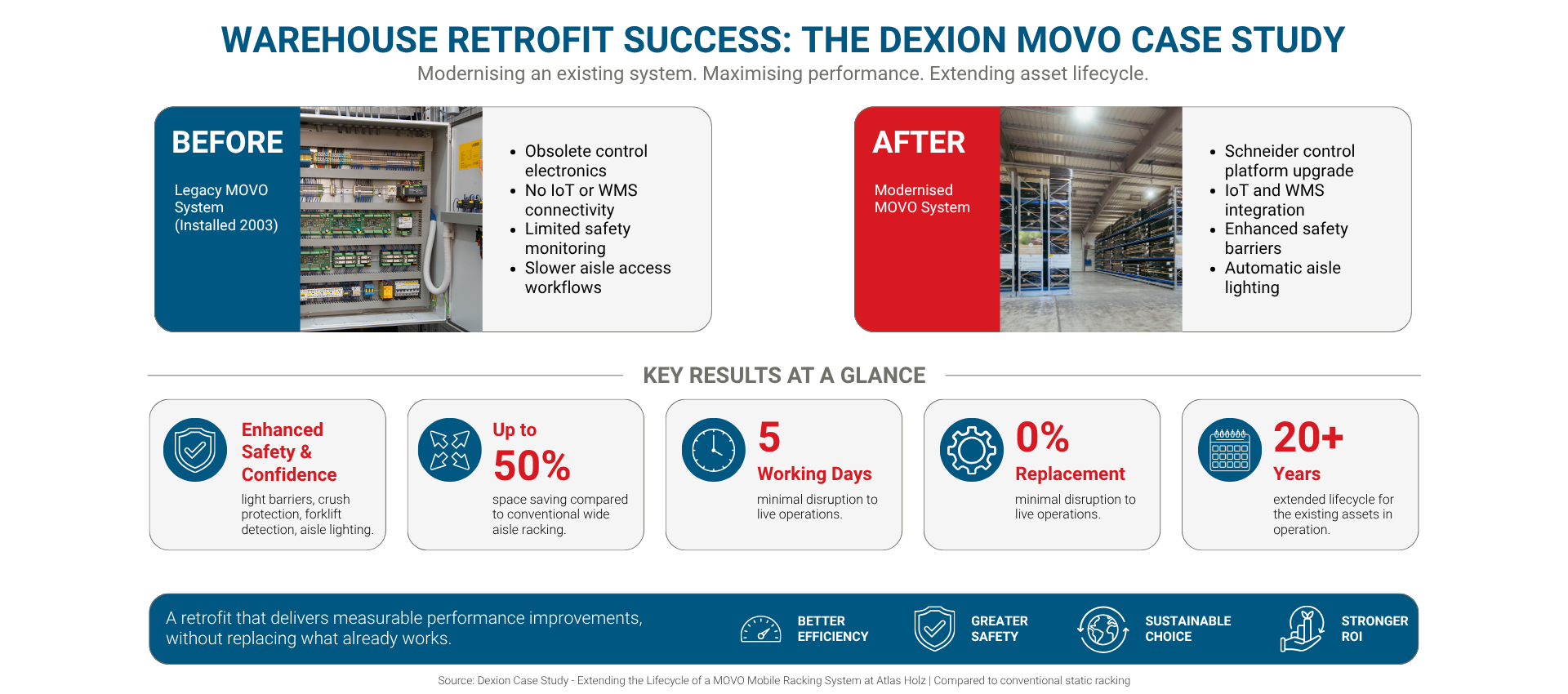
The true measure of a warehouse retrofit is how well it performs. A successful project increases capacity, efficiency, safety, and flexibility without introducing new problems; this demonstrates real value. Set yourself clear goals, track relevant KPIs, and compare results over time to measure success. This enables you to demonstrate the retrofit's impact and confidently plan for any future improvement stage.
The key takeaway is that clear measurement supports confident, effective next steps.