In addition to an extensive range, Bever has developed new initiatives such as a recycling centre, an in-house laundry service and a clothing repair workshop, perfectly suited to a target group that places a high value on sustainability.
The growth in demand was partly met by e-commerce activities, but the shops remain central, particularly because of the personal service and the opportunity to test and try out products. There are now 800 ‘Outdoor Experts’ ready to offer advice and assistance in almost 50 shops.
New Building in Pijnacker
This growth ultimately led to the new head office and distribution centre in Pijnacker, not far from the current location. The grand opening took place in June 2025. Naturally, the new building has been constructed sustainably, using wood, circular materials and even trees within the building. Solar panels will be installed on the roof of the distribution centre and the head office will have a green roof. It all fits in with the ambition to achieve the specific sustainability mission. Bever aims to be fully carbon-neutral by 2030.
 Logistics Reorientation
This drive is also reflected in the logistics approach. Thomas Poelert, Supply Chain Project Manager at Bever, explains: “For several years prior to this move, we had been thoroughly reviewing our current logistics processes. We knew that growth would sooner or later lead to new construction, as the existing warehouse was already very full. Outsourcing could have been an alternative, and we also looked into whether a different location in the Netherlands might offer an advantage. Ultimately, we chose Pijnacker again, including the decision to keep logistics in-house. Pijnacker is not only conveniently located, but a minimal relocation also helps to retain current employees, with all their knowledge and experience.”
The new premises and distribution centre may be state-of-the-art, but the amount of warehouse space was barely any larger. However, the higher ceiling did offer the necessary possibilities.
The New Layout with Dexion
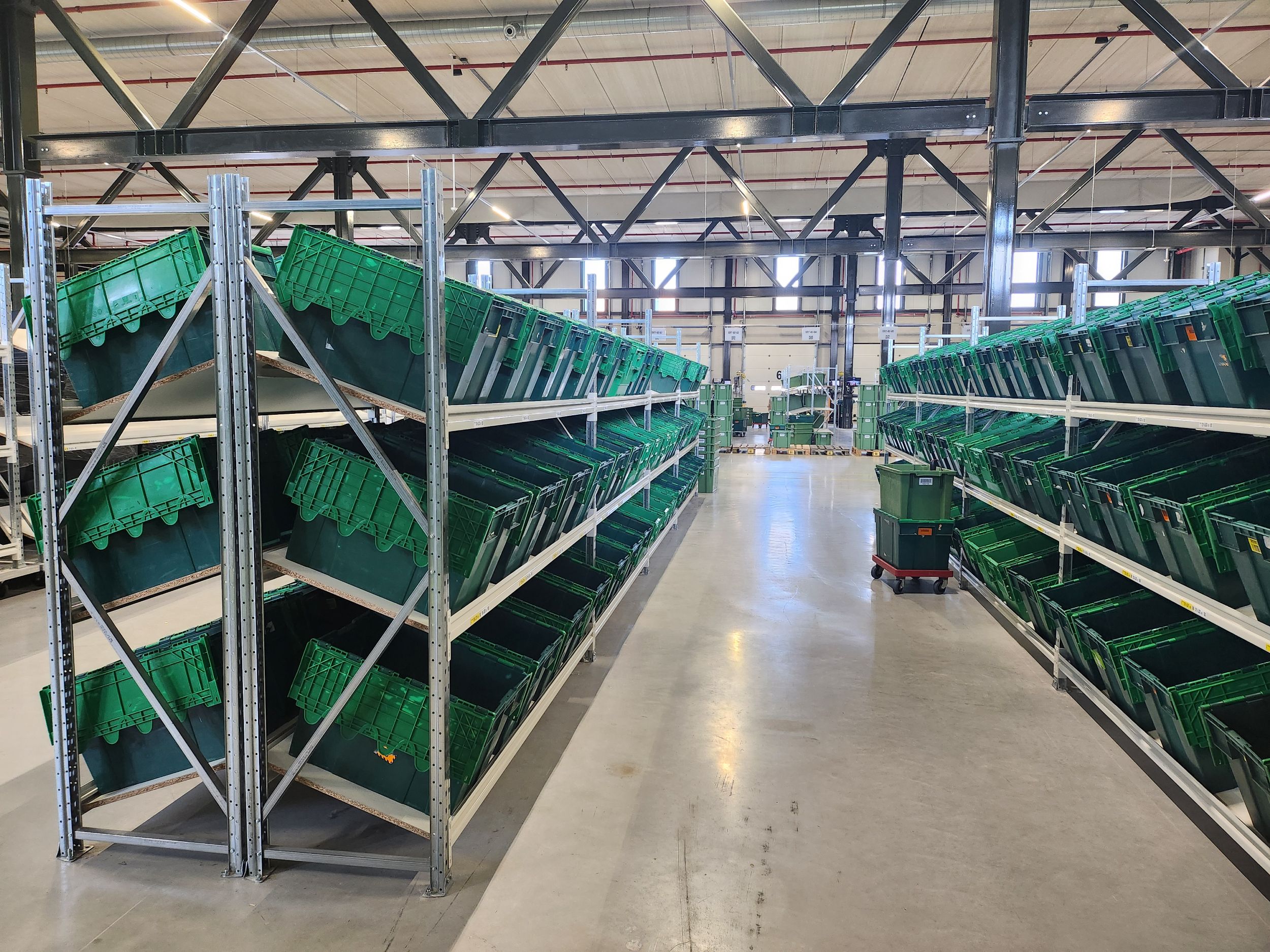
It was therefore necessary to store goods more intelligently and compactly. Together with a consultancy firm, Thomas and his team began designing the new layout of the distribution centre. Naturally, the staff were involved in this process. The key factors driving these tasks were still the many non-standard processes, a shared stock (to serve both the shops and e-commerce orders) and the relatively large inbound processes, due to the many different brands and suppliers. Furthermore, upon arrival, items are sorted and scanned one by one to detect errors at an early stage. The outbound flows are relatively small, involving a limited number of operations, which is mainly due to the cross-docking and sorting operations on arrival. Bever aims to minimise storage as much as possible and uses Dexion wide-span racking with slanted shelves and plastic crates for this purpose, in combination with a roller conveyor (Costo). Through this (filtering) process, Bever is able to send 30% of incoming goods straight to the shops. The remaining products go to the storage locations.
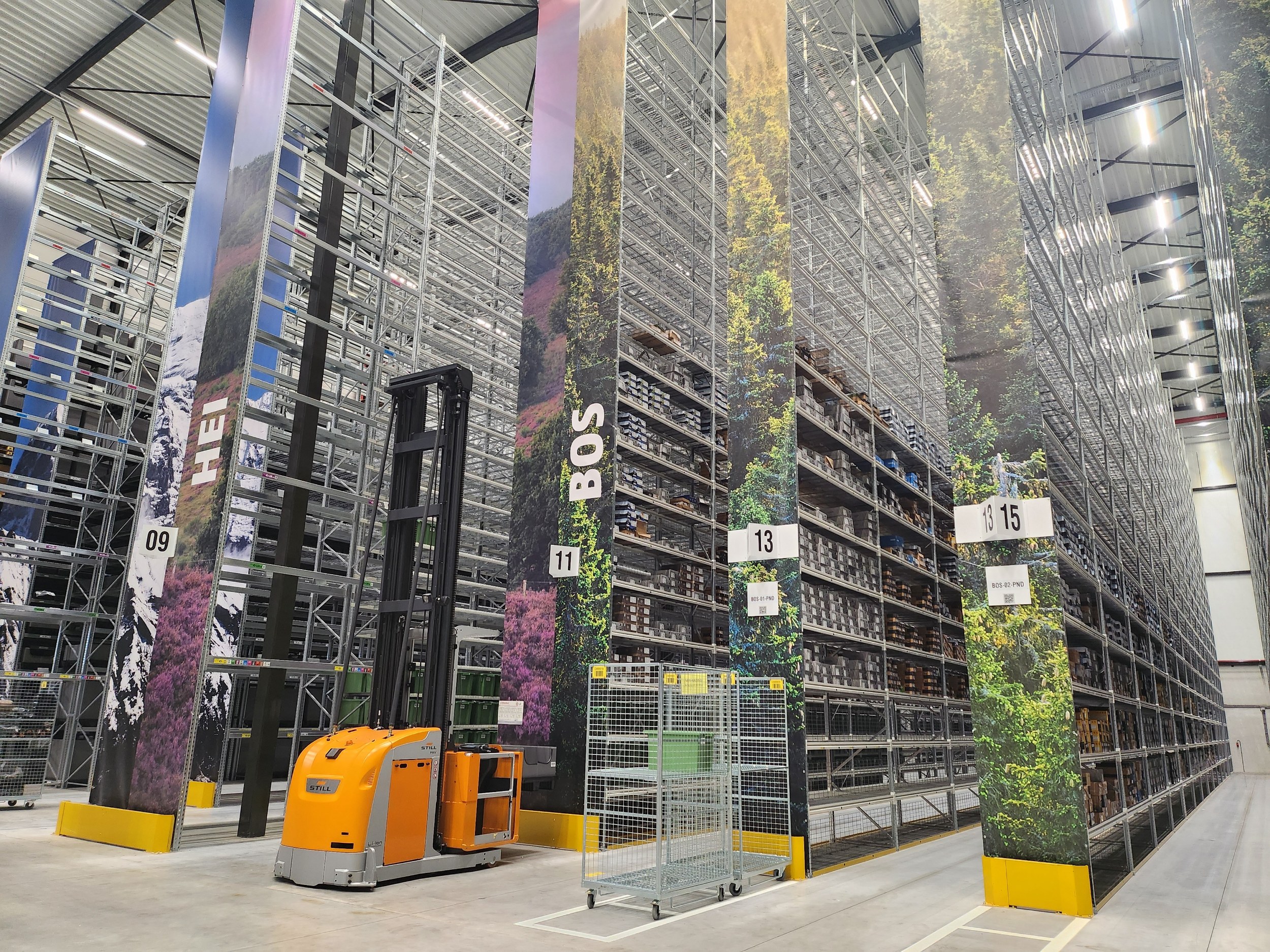
Given the building's height and the need for more storage, a narrow-aisle system was the logical solution. The so-called ‘non-bin’ products are stored on pallets of various sizes using a VNA truck in over 13-metre-high, galvanised Dexion pallet racking. The areas for ‘quarter pallets’ and the under-runs are fitted with wire mesh grids, partly for safety and partly to provide a suitable space for small pallets. Frame and upright protectors minimise collision damage to the pallet racking and the ‘shoe’ section.
Special racking for shoes was created using Dexion’s LS3 Wide-Span System. These relatively narrow racks reach a height of up to 15 metres, with mesh back panels to prevent shoe boxes from being pushed through the rear. For stability, an overhead link was installed at the very top between the rows.
Smaller items are stored in shelving units on a mezzanine floor. Dexion’s HI280 racks are already prepared for an additional mezzanine level, should extra storage space prove necessary. In the current configuration, the racks already offer 33,000 storage locations, with products allocated a single-item slot. The ends of the racks are adorned with attractive prints of outdoor sports. In the enclosed ‘secured-area’ cage, high-value products are stored, and winter sports items are kept in the special ski racks with divider bars.
In total, around 40,000 SKUs will be kept in stock.
Thomas concludes: “As mentioned, we didn’t rush into this new distribution centre and took the time to find the right partner for the fit-out. Nevertheless, we quickly settled on Dexion, which meant they could contribute ideas during the design phase. Dexion is an expert company with extensive experience in larger projects, but we were also impressed by their no-nonsense approach, friendliness and creativity. All in all, it was quite a puzzle to store more in a more compact space. A major advantage is that they can offer a very wide range of products, all at a good price-quality ratio. What’s more, they handle everything in-house.”