Location: Trübbach, Switzerland
Industry: Timber trade
Customer: Atlas Holz AG
Application: Storage of solid wood, veneers and high-quality timber products
Initial situation: MOVO mobile racking system installed in 2003 with outdated control and safety technology
Solution: Targeted retrofit of control, safety and operating systems while retaining the existing mechanical structure.
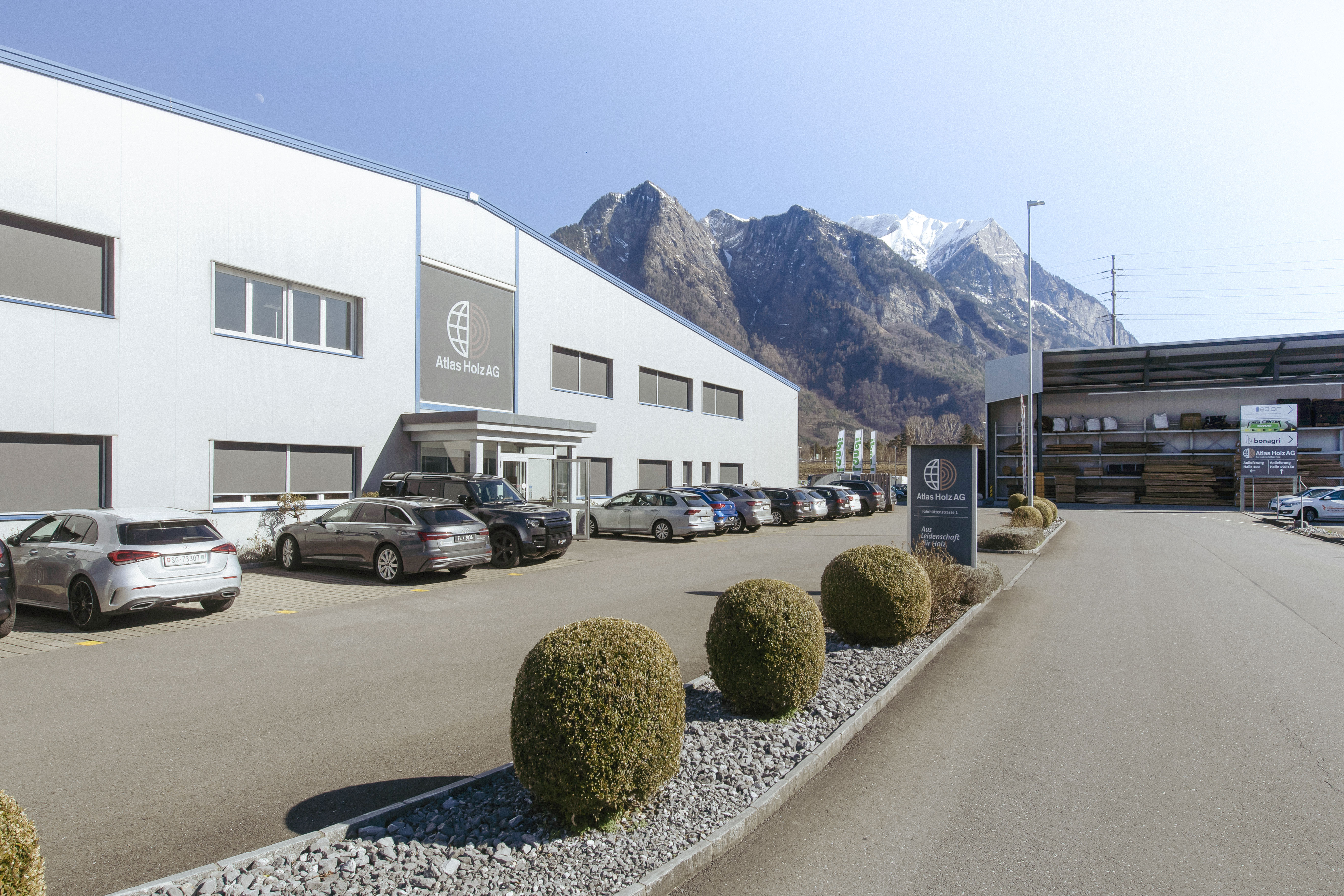
A Family Business, A Passion for Wood, A Warehouse Built to Match.
Atlas Holz AG was established in 2002 by the Quirici family in Trübbach, a small town nestled in the Rhine valley of St. Gallen, Switzerland. Today, they are Switzerland's leading specialist supplier of veneers, solid timber, and reclaimed wood. The company operates on a 10,000 m² site, stockpiling over 100 wood species in warehouses designed to handle everything from delicate figured veneers to heavy structural beams. Their 400 m² showroom allows customers to see and feel the products before purchasing. It is a business that deals with materials that breathe, warp, and respond to their environment.
Storage remains a vital aspect at Atlas Holz and is central to all their activities. That’s why, when they built their first major warehouse in 2003, they chose Dexion to supply MOVO mobile pallet racking. And when they expanded in 2011 and again in 2023, they continued to return. Their storage infrastructure narrates the entire story of their company.
When Spare Parts Stop Existing
The original 2003 system, comprising seven carriages each with two motors and cantilever arms, was still running fine. As Ivo Quirici puts it: "The mechanical structure of our system from 2003 was still in very good condition." The problem wasn't the mechanics. It was the control electronics buried inside it. Those circuit boards had been quietly discontinued. With no more production and a dwindling supply, they were one failed component away from a system that couldn't be fixed.
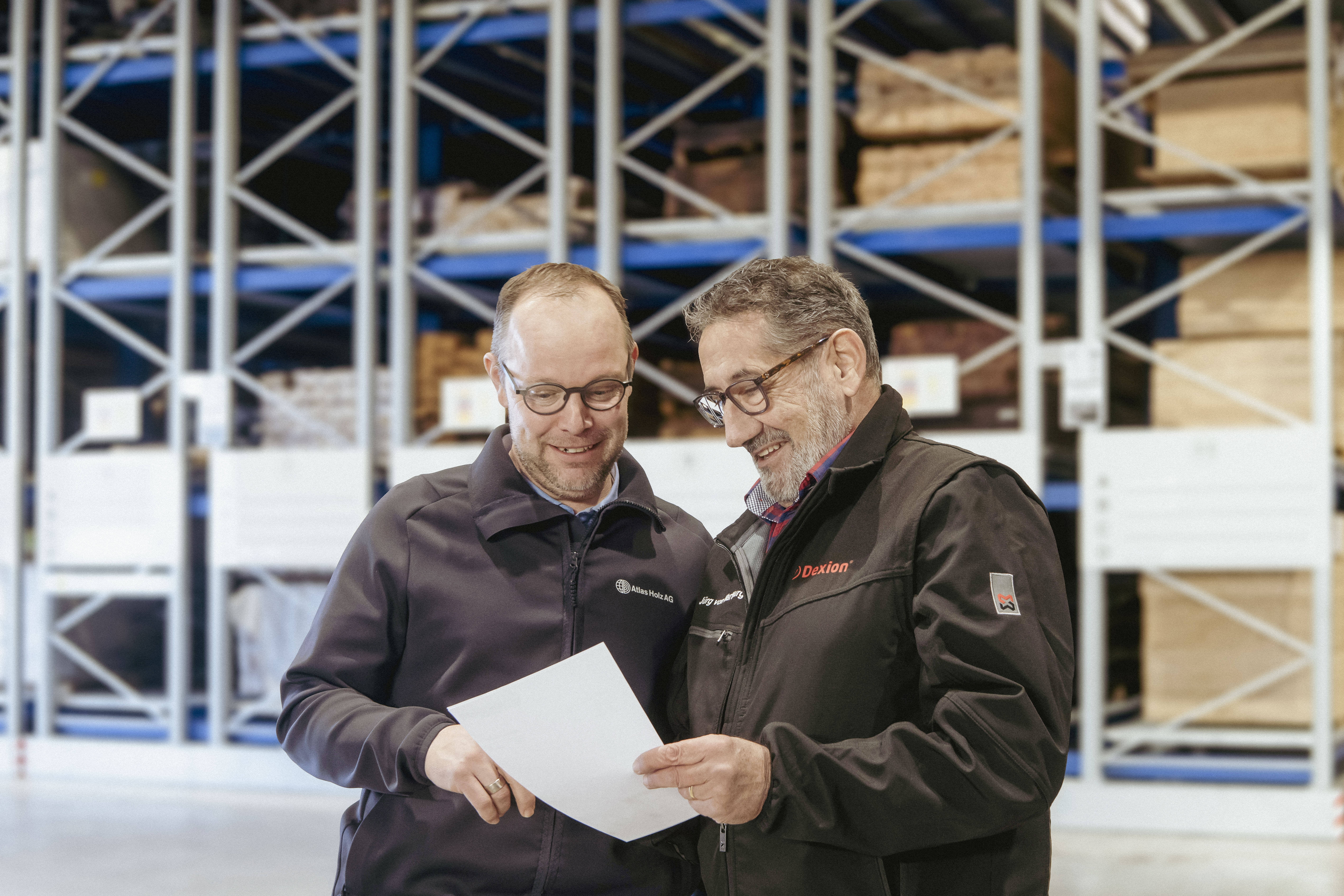
For Atlas Holz, the conclusion was clear: "Key electronic components were no longer reliably available, which made a retrofit necessary." For a business handling rare veneers and climate-sensitive timber, unplanned downtime isn't an inconvenience. It's orders that can't ship and customers who don't wait.
What They Actually Needed
As a specialised timber merchant, Atlas Holz could not accept unplanned downtime or extended outages. At the same time, replacing fully functional mechanical components was neither economically nor sustainably justified.
- Modernisation without replacing the existing mechanical structure
- Implementation during ongoing warehouse operations
- Improved safety and operating comfort
- Long-term assurance of spare parts availability
The Solution
The brief was clear, even if the job wasn't simple: replace the brains without replacing the whole system. The mechanical structure (carriages, cantilever arms, track) was all perfectly usable – a testament to time and quality. Atlas Holz hadn't spent 20+ years building a reputation for precision by ripping out things that still worked. What was needed was an upgrade to the control. Strip out the obsolete IFM electronics, install modern, supported equipment, and do it without shutting down a warehouse that moves timber every single day.
Five Working Days. Zero Disruption.
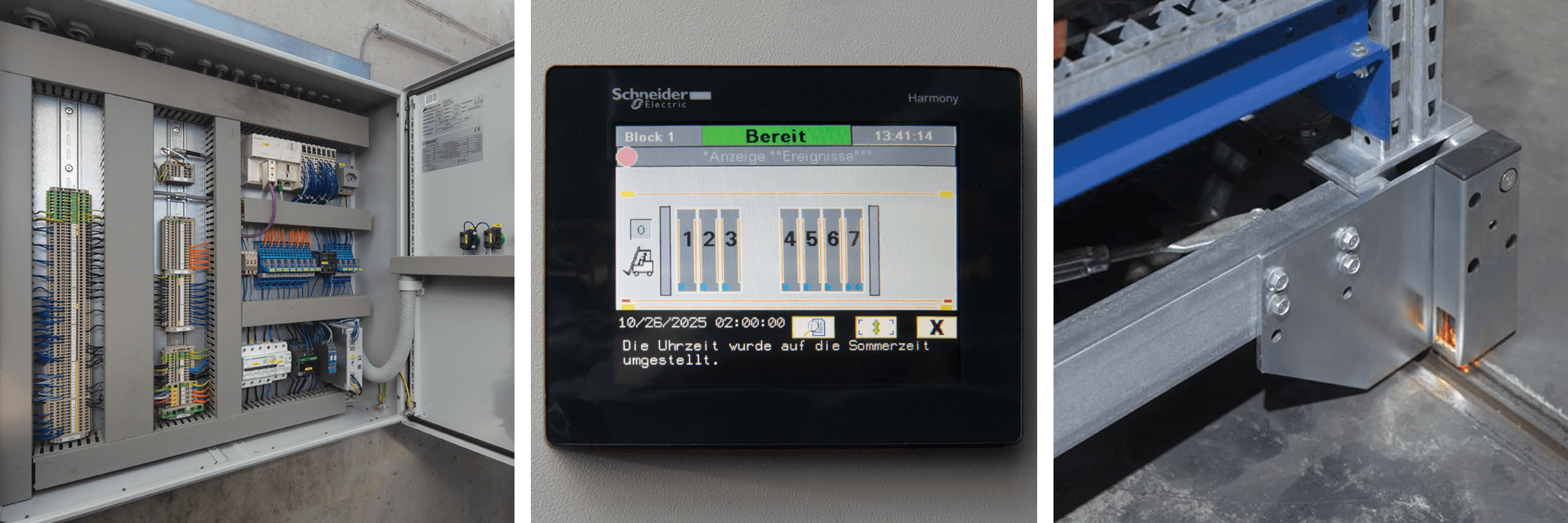
This is where Dexion enters. The solution was a full conversion to a modern and widely supported Schneider control system, with a supply chain that isn't going to vanish overnight.
- Replacement of seven carriage control cabinets and one master control cabinet
- Installation of 14 new light barriers on the carriages
- New access monitoring and forklift detection
- Installation of approximately 1,100 metres of new cabling
- No mechanical components replaced
The effect on the team was immediate. "Our employees now work faster, more efficiently, and more reliably." The 2003 system also gained capabilities it previously never had: LVS connection, radio control, and IoT integration. A maintenance job became a complete modernisation. The system originally installed in 2003 is now at the same level as the newest system.
Enhanced Safety and Improved Usability
Following the retrofit, the MOVO system offers a significantly higher level of safety and noticeably simplified operation in everyday use.
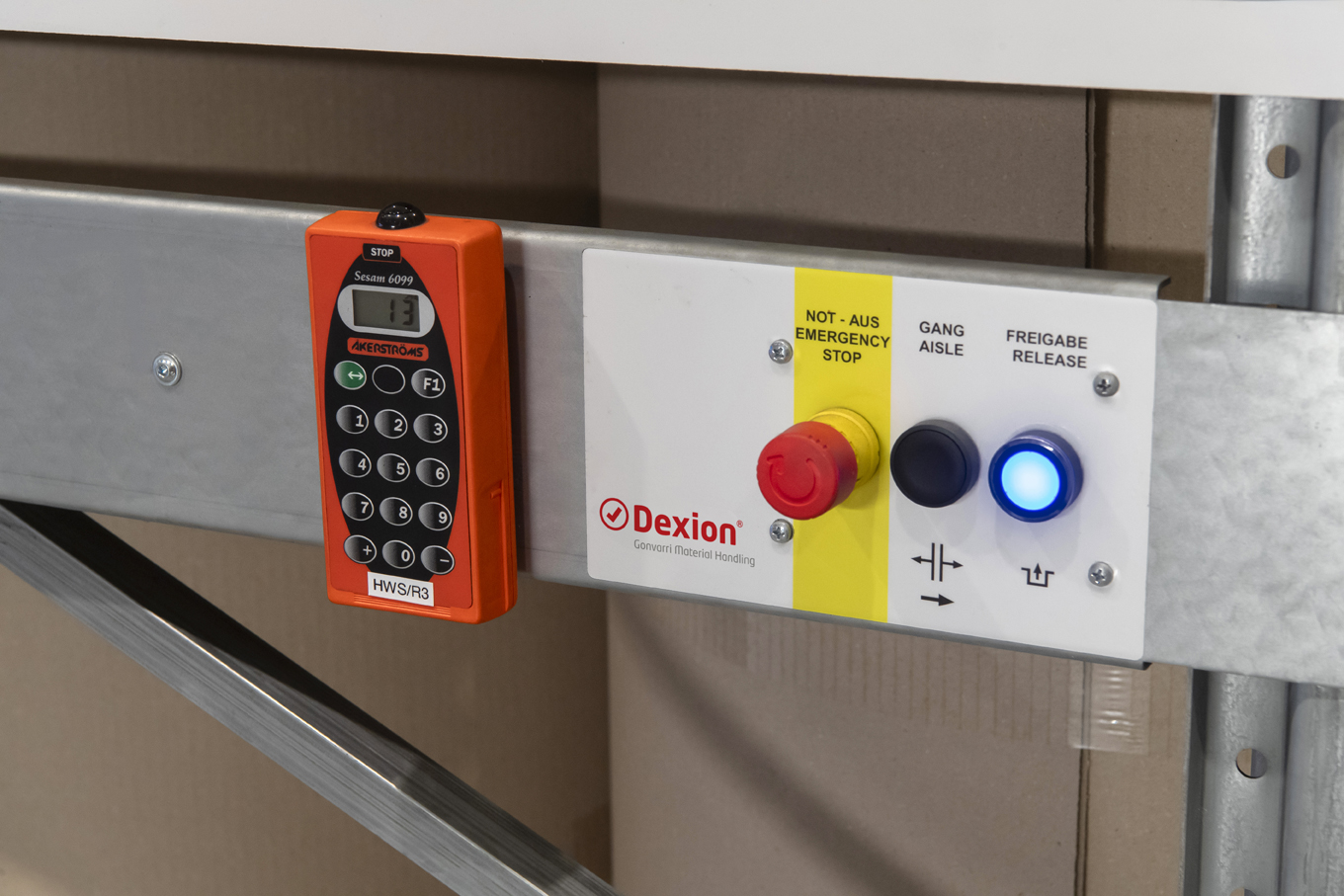
- Multi-beam light barriers at three height levels
- Forklift detection for controlled aisle opening
- Illuminated release buttons on each carriage
- Automatic aisle lighting
- Crush protection
- Radio remote control instead of a central control panel
Benefits in Daily Operation
The retrofit delivered immediate and measurable improvements in day-to-day operations.
- Faster and more efficient workflows
- Increased operational safety
- Significantly improved operating comfort
- Long-term serviceability and spare parts security
Three Systems Held to One Standard
The 2011 and 2023 installations were always on current technology. Now the oldest 2003 system has joined them. All three generations of MOVO racking at Atlas run on a single, modern and fully supported platform. The Quirci family built their business on doing things properly, matching the right timbers to the right customers to the standards that Swiss craftsmanship demands. The racking that supports it all should be no different.
Because timber this good deserves storage that never lets it down.